 SunSea Hub
SunSea Hub › Features › Return charges
Features · Return
Recharge fuel, breakage and missing items on return
When a rental ends, SunSea Hub turns the inspection findings into amounts due: missing fuel based on the readings, missing or broken equipment based on the inventory, abnormal cleaning and late return. The rental operator approves each line, then collects it by link, at the dock or from the security deposit.
Fuel
The level is recorded at departure and on return; the shortfall is converted into litres and euros. Refuelling is then done by the fuel team and recorded with its receipt — or marked as not needed. Whether or not fuel is included in the rental, only the recharging changes.
Missing or broken equipment
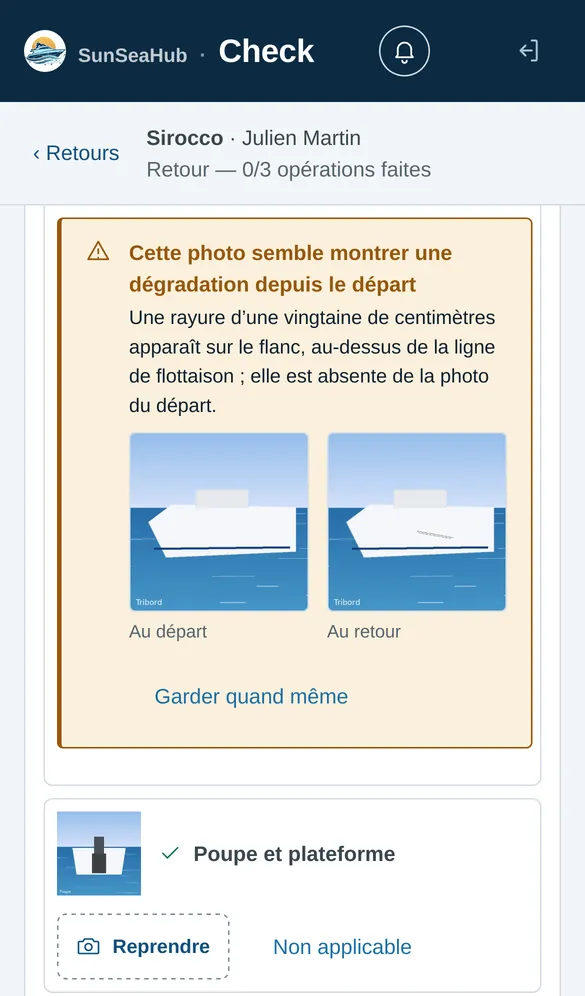
The inventory returned is compared with the inventory handed over. Each discrepancy suggests a line at the equipment’s replacement price; a line with no price arrives unticked, and the quantity cannot exceed the discrepancy recorded. The rental operator can also waive it, giving a reason.
Abnormal cleaning
The customer does not have to wash the boat. The “Cleanliness” point of the check-out inspection distinguishes the cleanliness expected after normal use from abnormal cleaning, which is recharged.
Late return
The actual return time is compared with the scheduled time. A late fee is never automatic: it is a decision for the office, which sets the amount.
Collecting payment
| Method | When to use it |
|---|---|
| Payment link | The customer has left; they pay remotely |
| At the dock | The customer is still there; they pay contactless |
| From the security deposit | Capture the exact amount from the card pre-authorisation |
As long as an amount is still due, the security deposit is held, and Fleet flags it. See the security deposit.
What is not recharged
Recharging is based on the inspection carried out with the customer, before the return is closed. Damage discovered afterwards is a matter for insurance: it is reported as a claim, in the incidents and insurance module.
Frequently asked questions
Is the amount sent to the customer without approval?
No. Each line is suggested to the rental operator, who ticks it, corrects it or waives it before the amount becomes due.
Can the same breakage be recharged twice?
No. A rental carries a single decision on recharging equipment; revisiting it corrects the amount, it does not double it.
Who refuels on return?
The fuel team, or the skipper. Refuelling is recorded with its receipt, or marked as not needed, before the return can be closed.
Read next
Security deposit
A contactless card pre-authorisation at the dock: authorised, not debited. At return, amounts due are taken; otherwise released within 12 hours.
Check-in inspection
With Check: a photo plan per boat, inventory, fuel and engine hours, the customer’s signature at departure and return, return compared with departure.
Insurance for a boat rental company
Insuring a pleasure boat is optional in France, but harbours require it. Damage, third-party liability, the excess that often sets the deposit.
Comparison
SunSea Hub, Nauticoncept, Nautic Manager, SeaBook and Boat Rental Manager on 17 criteria: deposit, inspection, GPS, pricing, no minimum term.
Fleet, Check, Fix and Sup — the office, dock, workshop and owner apps — are in French today. What your renters read is in English, French and German: the booking widget, quotes, payment links and messages. The rental contract is in English and French.